


(Licence No. 182572C)
Is your home struggling with condensation, musty smells, damp issues and/or recurring mould? If you’re constantly wiping down windows, cleaning mould from walls or relying on mould pots or what we call band aid solutions to manage excess moisture, it may be time to look at improving the ventilation throughout your whole home.
Modern homes can trap moisture, pollutants and stale air indoors, particularly when natural ventilation is limited. Without adequate air exchange, excess moisture can accumulate, creating conditions that encourage condensation and mould growth.
Whole home ventilation and Positive Input Ventilation (PIV) systems help address these problems by introducing filtered fresh air and improving airflow throughout your home.
At Xchange Air, we offer ventilation solutions designed to help manage indoor moisture, reduce condensation and create a fresher, more comfortable living environment. Depending on your home and its requirements, a suitable system can also offer additional benefits such as temperature control and filtered air.
Whether you live in a house, townhouse, unit or apartment, we’ll help you find the right ventilation solution for your property.

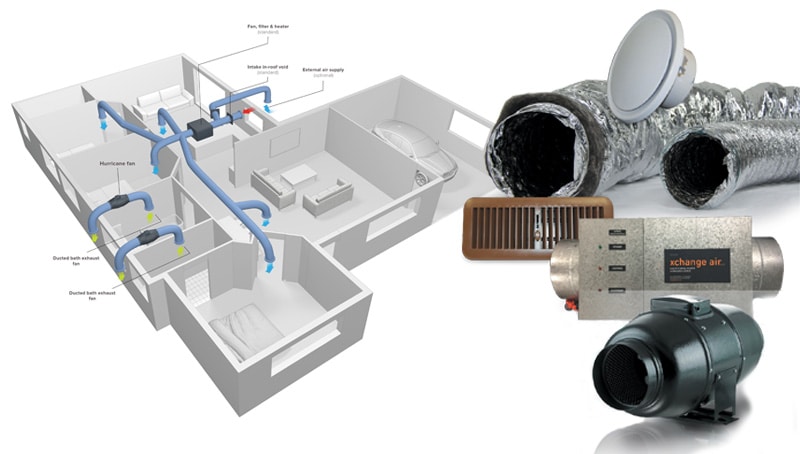
Positive Input Ventilation is a whole home ventilation system that introduces filtered fresh air into your home at a controlled rate.
A PIV unit is typically installed in the roof space or the sub floor void, where it draws in air, filters it and distributes it through a ceiling-mounted diffuser or floor vents. This gentle, continuous supply of fresh air helps dilute moisture-laden indoor air and encourages stale air to move out through natural leakage paths and other suitable openings.
By improving air exchange, PIV can help manage condensation and force dampness out of your home.
We use an F7 filter in these systems.
PIV can be installed as a standalone solution or, where appropriate, alongside sub floor ventilation and sub floor insulation. This can be particularly useful when different areas of the home are contributing to moisture problems.
Some systems also include temperature sensors to engage heaters to temper the incoming air.
The result is a more controlled approach to whole-home ventilation that can help manage indoor humidity and improve everyday comfort.
Condensation occurs when moisture in the air settles on cooler surfaces, such as windows, walls and other cold areas of the home. When moisture persists, it can contribute to mould growth and unpleasant musty smells.
Bathrooms, kitchens, bedrooms and other enclosed areas can all contribute to indoor humidity through everyday activities such as showering, cooking, drying clothes and simply breathing.
When moisture cannot escape effectively, indoor humidity can build up.
Whole home ventilation and positive input ventilation helps by introducing fresh air and encouraging the movement of moisture-laden air out of the home. This can reduce the conditions that contribute to condensation and mould, particularly where inadequate ventilation is a major part of the problem.
For homeowners looking for additional features, our whole home ventilation solutions can provide more than basic air exchange.
Depending on the system selected, incoming air can be filtered and distributed throughout the home, with temperature-related controls helping manage comfort as conditions change.
Some systems also offer incoming air tempering or heating, helping warm the supplied air when temperatures drop below a set level.
This combination of ventilation, filtration and temperature control can help create a more consistent indoor environment while managing excess moisture.
Whole home ventilation helps bring fresh air into living spaces rather than allowing stale indoor air to remain trapped. Through the F7 filtration system, incoming air can is filtered to reduce selected airborne particles. This can include particles associated with dust and other airborne contaminants.
By improving air exchange and helping control excess indoor moisture, ventilation can reduce the conditions that encourage mould growth.
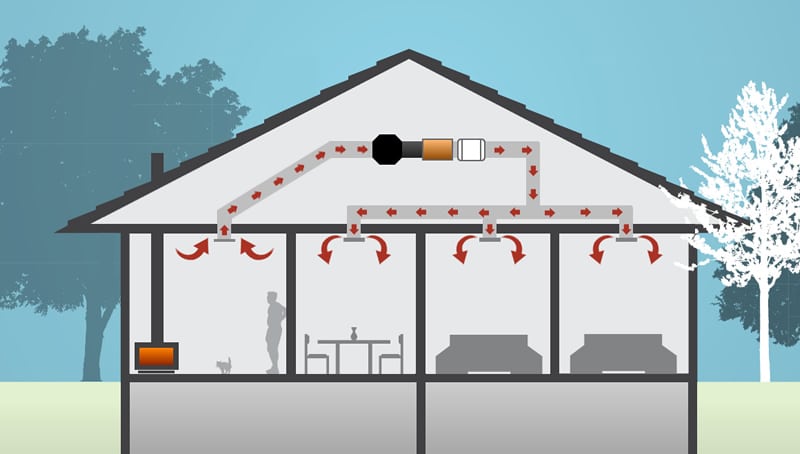
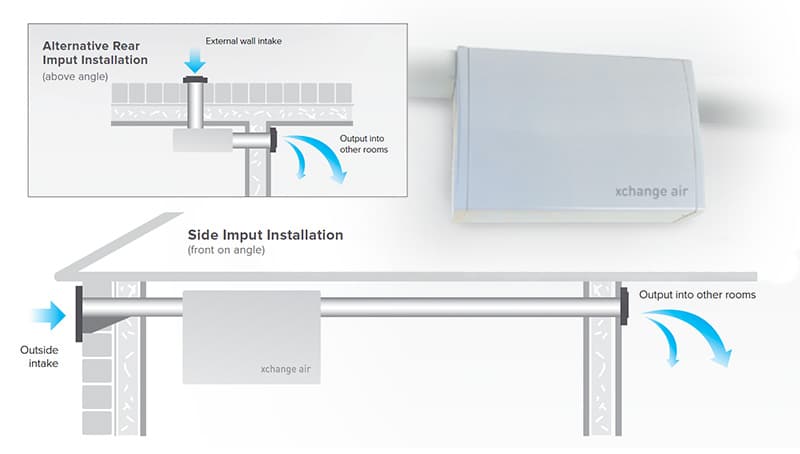
Either used in conjunction with, or as an alternative to, sub floor ventilation, positive input ventilation (PIV) is a whole home ventilation system. Positive input ventilation means that fresh air is drawn into the roof, filtered, and then diffused into your home at a continuous rate, encouraging the movement of air from inside to out.
A unit is mounted in the roof space and disperses fresh air at ceiling level. The units are fitted with an internal temperature sensor, so that air volume can be increased when the roof temperature is above a set level for passive heat recovery in the cooler months. If temperatures in the roof get too hot, standby mode kicks in to reduce air flow and prevent overheating your home. An option is also available for a unit that discharges into the central hallway – perfect for units, apartments and houses with no roof space.
BOOK A FREE HOME ASSESSMENT TO DISCUSS IF PIV IS RIGHT FOR YOU VENTILATION NEEDS.
Home ventilation system can be a powerful answer to your home’s heating needs. Smart home ventilation can harness radiant heat recovery, reduce the amount of work your heating system needs to do, and cut down your energy use – so you aren’t getting heated up by heart-attack inducing bills!
Here’s some of our favourite reasons why home ventilation is so hot right now: